Tankless vs. Tank Water Heaters: What Makes Sense for a Massachusetts Home
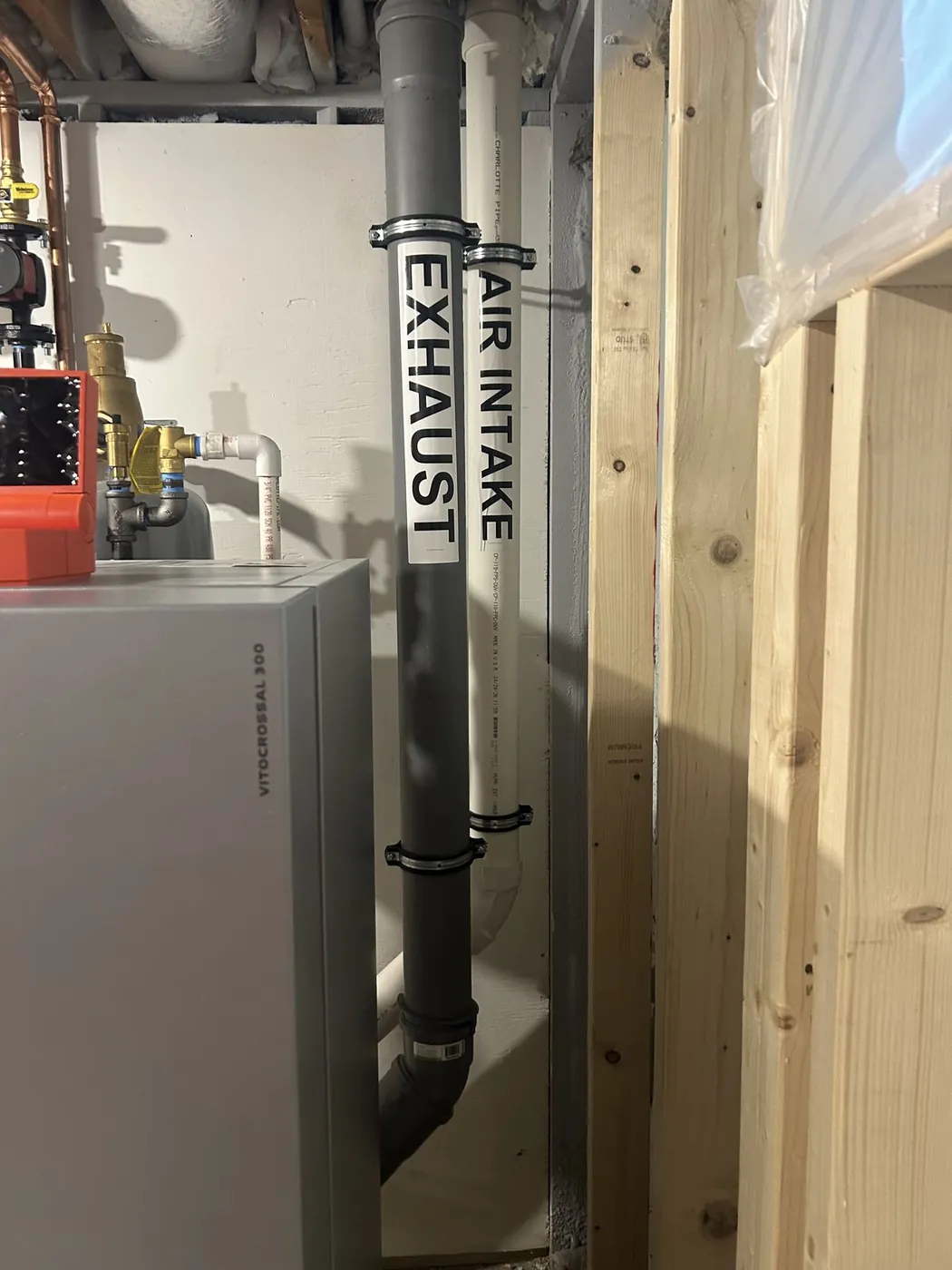
We install both, so we have no reason to push you one way. Here's the honest comparison we give customers at the kitchen table.
Upfront cost
A tank replacement is the cheaper install by a good margin. Tankless costs more up front because the unit is more expensive and the install often needs a larger gas line and new stainless venting. Mass Save rebates narrow the gap for qualifying units.
Operating cost
Tankless wins. A tank keeps 40–50 gallons hot around the clock whether you use it or not. Tankless heats only what you use. Most households see a meaningful drop in gas usage.
Lifespan
Tank: 8–12 years. Tankless: 20+ years with annual descaling. Over 20 years you'd buy two tanks versus one tankless, which changes the math considerably.
Hot water supply
Tankless is endless — three showers back to back, no problem — but it's limited by flow rate. A properly sized unit handles two fixtures at once comfortably. A tank has a fixed amount of hot water but unlimited flow until it runs out.
When tankless is the wrong choice
- Your gas line can't be upgraded affordably.
- You have very hard water and won't commit to annual descaling.
- You're selling the house in a couple of years and won't see the payback.
- You need a very high simultaneous flow (large soaking tub plus showers running) — sometimes two units or a tank is the better fit.
Our recommendation
If you plan to stay in your home 7+ years and have gas service, tankless usually wins on total cost of ownership. If you have electric, look hard at a heat pump water heater instead. If you need hot water today and budget is tight, a quality tank is a perfectly good choice. We'll size and quote whichever you pick.