5 Signs Your Water Heater Is About to Fail (Massachusetts Homeowner's Guide)
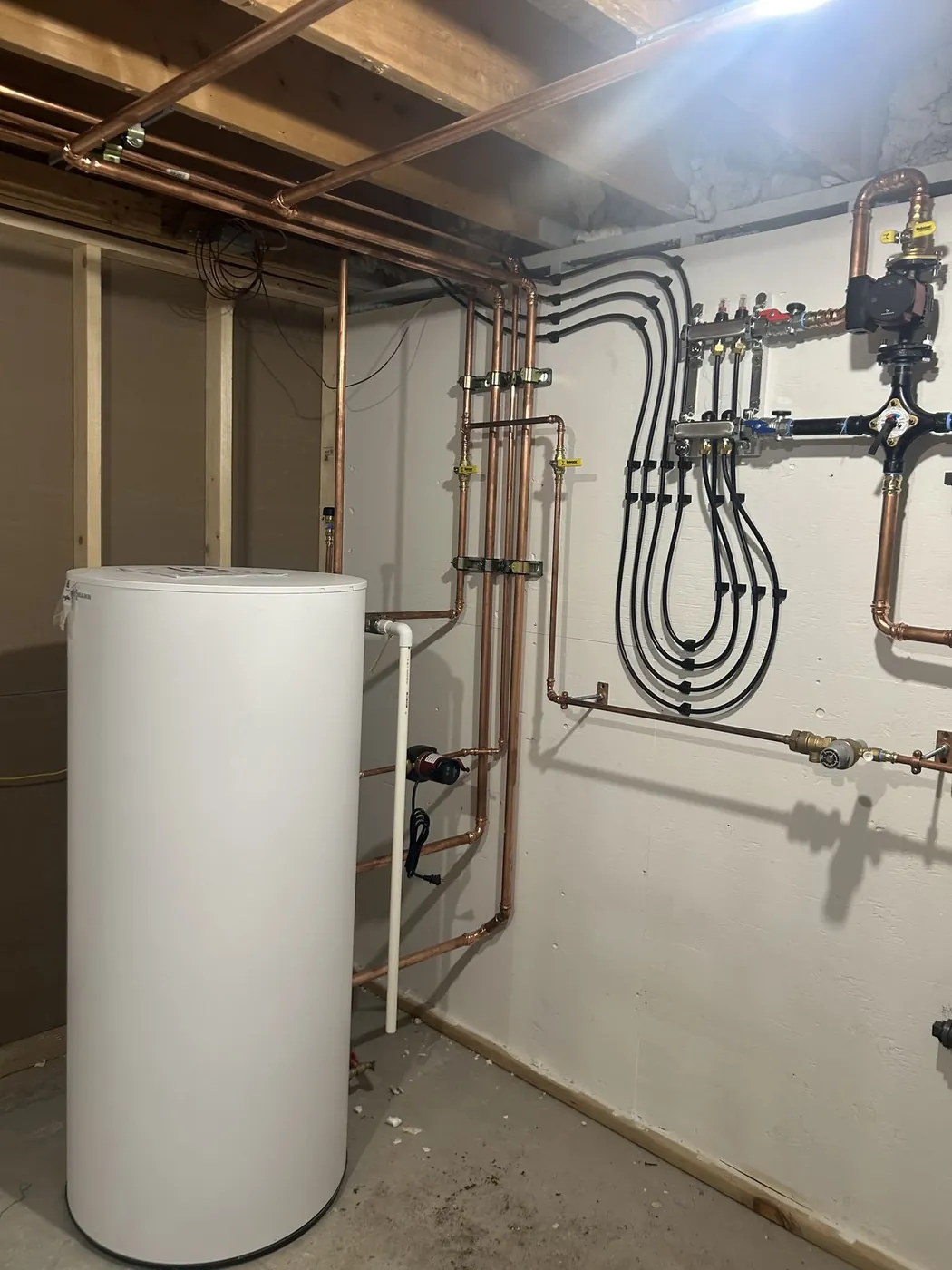
A tank water heater almost never fails without warning. The problem is that most homeowners don't know what the warnings look like — and by the time the tank splits, there are 50 gallons on the basement floor. Here are the five signs we see most often in Massachusetts homes.
1. It's more than 10 years old
Standard gas and electric tank heaters last 8–12 years. Find the serial number on the manufacturer's label; the first few characters usually encode the manufacture date. If you're past ten years, start planning — replacing on your schedule beats replacing at 11 PM on a Sunday.
2. Rust-colored hot water
If only the hot side runs rusty, the inside of the tank is corroding. Once the glass lining fails and the steel starts rusting, it's a matter of time before it leaks through. (If both hot and cold run rusty, the problem is your pipes, not the heater.)
3. Rumbling, popping or banging
Sediment builds up on the bottom of the tank over the years, especially with harder water. When the burner fires, water trapped under the sediment boils and pops. The sediment also insulates the water from the burner, so the tank runs longer, costs more, and overheats the steel.
4. Moisture or corrosion around the base
Check the floor around the tank and the fittings on top. A little condensation on a cold day can be normal; a persistent damp spot or rust streaks down the side are not. A leak from the tank body itself can't be repaired.
5. Inconsistent or lukewarm water
If showers run cold faster than they used to, either sediment has reduced the tank's usable capacity or a heating element or dip tube has failed. Some of these are repairable; on an old tank, they're usually a sign to replace.
What to replace it with
If your old tank is electric, a heat pump water heater can cut your water heating costs by more than half, and Mass Save rebates are substantial. If it's gas, a Rinnai tankless unit gives endless hot water, lasts 20+ years, and frees up floor space. And sometimes a straightforward like-for-like tank is the right answer. We'll tell you honestly which one fits your house and budget.